1
Mount Taishan
- Initial inscription year
- 1987
- UNESCO reference number
- 437
- Category
- Mixed
- Later boundary changes
- No later boundary modification year listed on the official detail page
From UNESCO’s China directory, the first twenty properties are ordered by initial inscription year and then reference number. The order reflects this catalogue rule, not heritage value or visitor experience. Later boundary changes are listed separately and distinguish significant from minor modifications as labeled on official detail pages.
Check every property in UNESCO’s China directory as retrieved on 2026-10-16, sort by initial inscription year and then reference number, and take the first twenty. Check the adjacent Temple of Heaven (881) to fix the cutoff. Open each of the twenty official detail pages to verify the English name, reference number and initial year; take cultural, natural or mixed category from the country directory. Record later boundary changes separately, distinguishing significant and minor modifications as labeled on the detail pages. Use the full official directory names for Jiuzhaigou, Huanglong and Wulingyuan. This is not a heritage-value ranking or travel recommendation.
References: 22. Page edits do not imply that the underlying data is newer.
The first twenty entries span 1987–1998. The Summer Palace (880) and Temple of Heaven (881) are both dated 1998; sorting same-year entries by reference number places the cutoff at the Summer Palace. UNESCO’s detail pages also list minor boundary modifications for Mount Huangshan and Old Town of Lijiang in 2012, and significant boundary modifications for the Imperial Palaces, Potala ensemble and Suzhou gardens. Reference numbers are a deterministic tiebreak, not chronology within a year or value.
| Rank | Property | Initial inscription year | UNESCO reference number | Category | Later boundary changes |
|---|---|---|---|---|---|
| 1 | Mount Taishan | 1987 | 437 | Mixed | No later boundary modification year listed on the official detail page |
| 2 |
No sign-in required. Feedback is reviewed before any content is changed. Limit: 5 per day.
Checked the complete China inscription candidate set, initial inscription years and categories, and used the 21st candidate to verify the Top 20 cutoff.
The detail page confirms reference 437 and first inscription in 1987. No later boundary modification year is listed on the official detail page.
The detail page confirms reference 438 and first inscription in 1987. No later boundary modification year is listed on the official detail page.
The detail page confirms reference 439 and first inscription in 1987. It also lists 2004 significant boundary modification.
The detail page confirms reference 440 and first inscription in 1987. No later boundary modification year is listed on the official detail page.
The detail page confirms reference 441 and first inscription in 1987. No later boundary modification year is listed on the official detail page.
The detail page confirms reference 449 and first inscription in 1987. No later boundary modification year is listed on the official detail page.
The detail page confirms reference 547 and first inscription in 1990. It also lists 2012 minor boundary modification.
The detail page confirms reference 637 and first inscription in 1992. No later boundary modification year is listed on the official detail page.
The detail page confirms reference 638 and first inscription in 1992. No later boundary modification year is listed on the official detail page.
The detail page confirms reference 640 and first inscription in 1992. No later boundary modification year is listed on the official detail page.
The detail page confirms reference 703 and first inscription in 1994. No later boundary modification year is listed on the official detail page.
The detail page confirms reference 704 and first inscription in 1994. No later boundary modification year is listed on the official detail page.
The detail page confirms reference 705 and first inscription in 1994. No later boundary modification year is listed on the official detail page.
The detail page confirms reference 707 and first inscription in 1994. It also lists 2000 significant boundary modifications and 2001 significant boundary modifications.
The detail page confirms reference 778 and first inscription in 1996. No later boundary modification year is listed on the official detail page.
The detail page confirms reference 779 and first inscription in 1996. No later boundary modification year is listed on the official detail page.
The detail page confirms reference 811 and first inscription in 1997. It also lists 2012 minor boundary modification.
The detail page confirms reference 812 and first inscription in 1997. No later boundary modification year is listed on the official detail page.
The detail page confirms reference 813 and first inscription in 1997. It also lists 2000 significant boundary modifications.
The detail page confirms reference 880 and first inscription in 1998. No later boundary modification year is listed on the official detail page.
UNESCO confirms the Temple of Heaven was inscribed in 1998 as reference 881; with the Summer Palace at 880 in the same year, it follows the rank-20 cutoff under this list’s reference-number tiebreak.
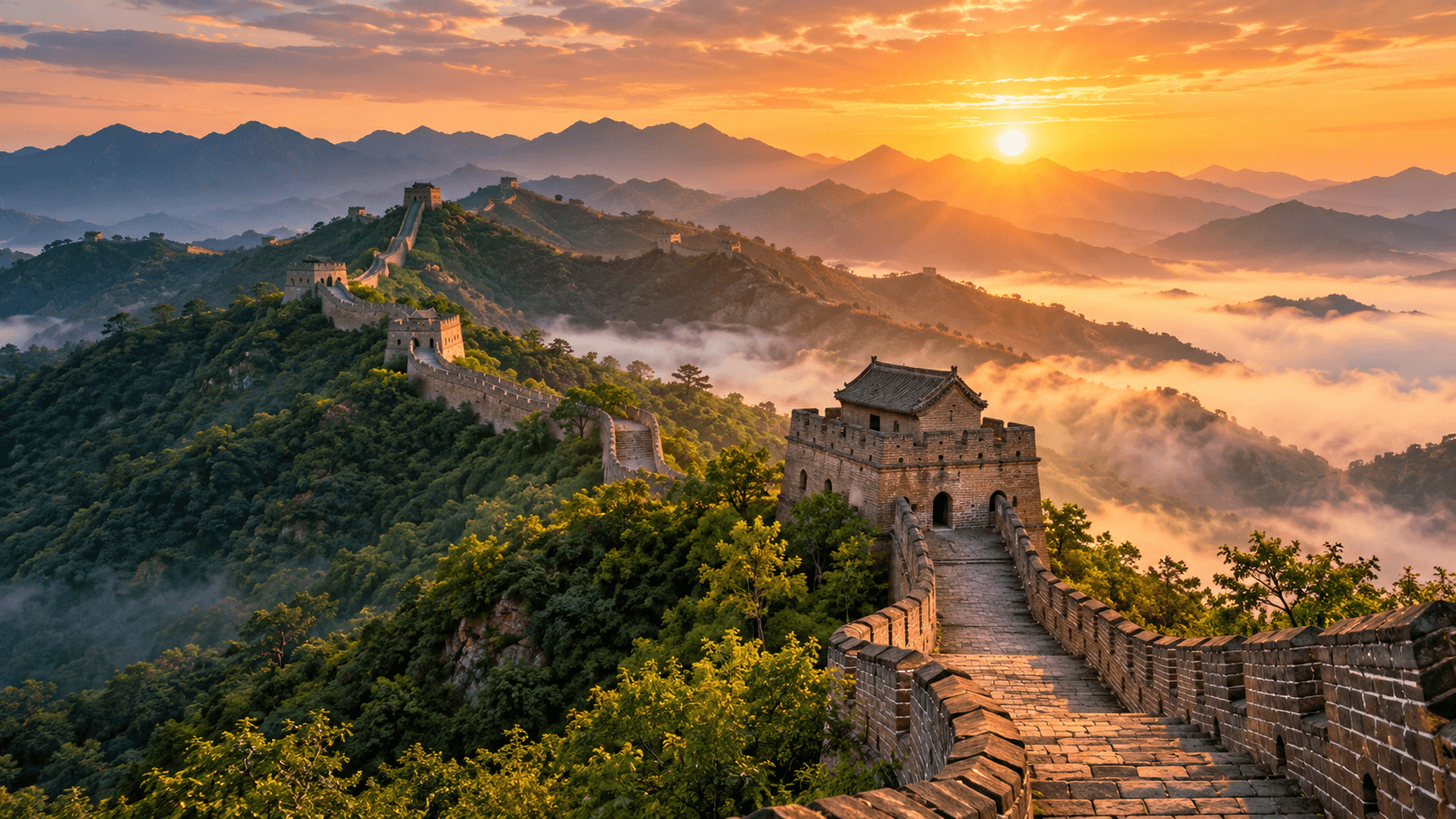
The Great Wall |
1987 |
438 |
| Cultural |
| No later boundary modification year listed on the official detail page |
| 3 | Imperial Palaces of the Ming and Qing Dynasties in Beijing and Shenyang | 1987 | 439 | Cultural | 2004(significant boundary modification) |
| 4 | Mogao Caves | 1987 | 440 | Cultural | No later boundary modification year listed on the official detail page |
| 5 | Mausoleum of the First Qin Emperor | 1987 | 441 | Cultural | No later boundary modification year listed on the official detail page |
| 6 | Peking Man Site at Zhoukoudian | 1987 | 449 | Cultural | No later boundary modification year listed on the official detail page |
| 7 | Mount Huangshan | 1990 | 547 | Mixed | 2012(minor boundary modification) |
| 8 | Jiuzhaigou Valley Scenic and Historic Interest Area | 1992 | 637 | Natural | No later boundary modification year listed on the official detail page |
| 9 | Huanglong Scenic and Historic Interest Area | 1992 | 638 | Natural | No later boundary modification year listed on the official detail page |
| 10 | Wulingyuan Scenic and Historic Interest Area | 1992 | 640 | Natural | No later boundary modification year listed on the official detail page |
| 11 | Mountain Resort and its Outlying Temples, Chengde | 1994 | 703 | Cultural | No later boundary modification year listed on the official detail page |
| 12 | Temple and Cemetery of Confucius and the Kong Family Mansion in Qufu | 1994 | 704 | Cultural | No later boundary modification year listed on the official detail page |
| 13 | Ancient Building Complex in the Wudang Mountains | 1994 | 705 | Cultural | No later boundary modification year listed on the official detail page |
| 14 | Historic Ensemble of the Potala Palace, Lhasa | 1994 | 707 | Cultural | 2000(significant boundary modification), 2001(significant boundary modification) |
| 15 | Lushan National Park | 1996 | 778 | Cultural | No later boundary modification year listed on the official detail page |
| 16 | Mount Emei Scenic Area, including Leshan Giant Buddha Scenic Area | 1996 | 779 | Mixed | No later boundary modification year listed on the official detail page |
| 17 | Old Town of Lijiang | 1997 | 811 | Cultural | 2012(minor boundary modification) |
| 18 | Ancient City of Ping Yao | 1997 | 812 | Cultural | No later boundary modification year listed on the official detail page |
| 19 | Classical Gardens of Suzhou | 1997 | 813 | Cultural | 2000(significant boundary modification) |
| 20 | Summer Palace, an Imperial Garden in Beijing | 1998 | 880 | Cultural | No later boundary modification year listed on the official detail page |
Rank changes are shown only for verified data editions with the same metric, scope and methodology.
Comments