1
Suaeda salsa
- Max Salt Tolerance (NaCl mmol/L)
- 1000
- Habitat Characteristics
- A typical euhalophyte that accumulates high levels of salt in leaves to reduce cellular water potential.
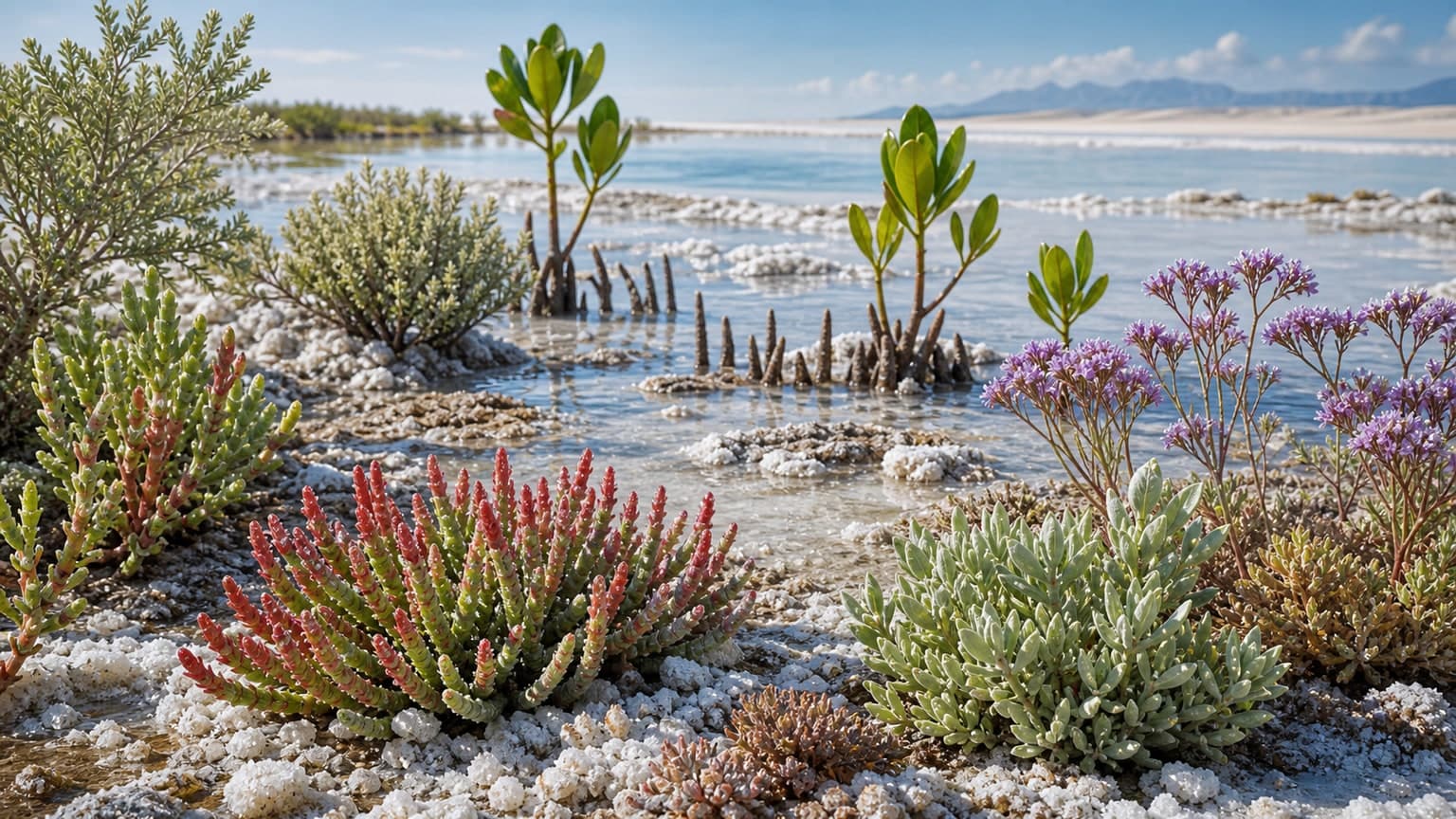
This ranking evaluates plant species based on their survival capabilities in extreme saline-alkaline environments, salt ion accumulation thresholds, and physiological osmotic adjustment mechanisms. These plants are crucial for ecological restoration and serve as vital resources for research in stress-tolerant genetic engineering.
The Suaeda salsa (Seepweed) rightfully claims the top spot. While most plants wither due to osmotic stress in soils with salinity exceeding 0.5%, this remarkable halophyte thrives in environments with salt concentrations as high as 1.0% to 2.0%, often accumulating salts in its tissues to levels far surpassing the soil itself. It is not just a 'guardian of saline-alkali lands,' but a potent bioremediator: a single hectare can absorb approximately 100-200 kg of salt annually, acting as a living engine for soil reclamation. In stark contrast, common crops like wheat suffer significant yield losses once salinity reaches a mere 0.3%. Its extraordinary resilience makes it a premier species for combating soil salinization in arid and semi-arid regions globally.
| Rank | Name | Max Salt Tolerance (NaCl mmol/L) | Habitat Characteristics |
|---|---|---|---|
| 1 | Suaeda salsa | 1000 | A typical euhalophyte that accumulates high levels of salt in leaves to reduce cellular water potential. |
| 2 | Salicornia europaea | 900 |
| 3 | Kandelia obovata | 850 | Features specialized root filtration systems, adapting to intertidal zones via salt-exclusion and secretion. |
| 4 | Tamarix chinensis | 800 | Actively excretes excess salt through leaf salt glands; an excellent tree for windbreak and sand fixation. |
| 5 | Salicornia herbacea | 750 | Succulent stems effectively store water and dilute intracellular salt concentrations. |
| 6 | Atriplex canescens | 700 | Exhibits high adaptability to saline-alkaline pH levels and rapid growth rates. |
| 7 | Phragmites australis | 600 | Root systems secrete acidic substances to improve soil environments; highly resilient. |
| 8 | Limonium sinense | 550 | A halophytic herb with leaves capable of secreting salt crystals. |
| 9 | Haloxylon ammodendron | 500 | A primary sand-fixing plant in arid regions with excellent saline-alkaline and drought tolerance. |
| 10 | Populus euphratica | 450 | Possesses strong ion-shielding mechanisms, enabling large-scale natural forest distribution in high-salinity soils. |
Comments