1
Methanopyrus kandleri (Strain 116)
- Max Growth Temperature (°C)
- 122
- Habitat
- Deep-sea hydrothermal vent
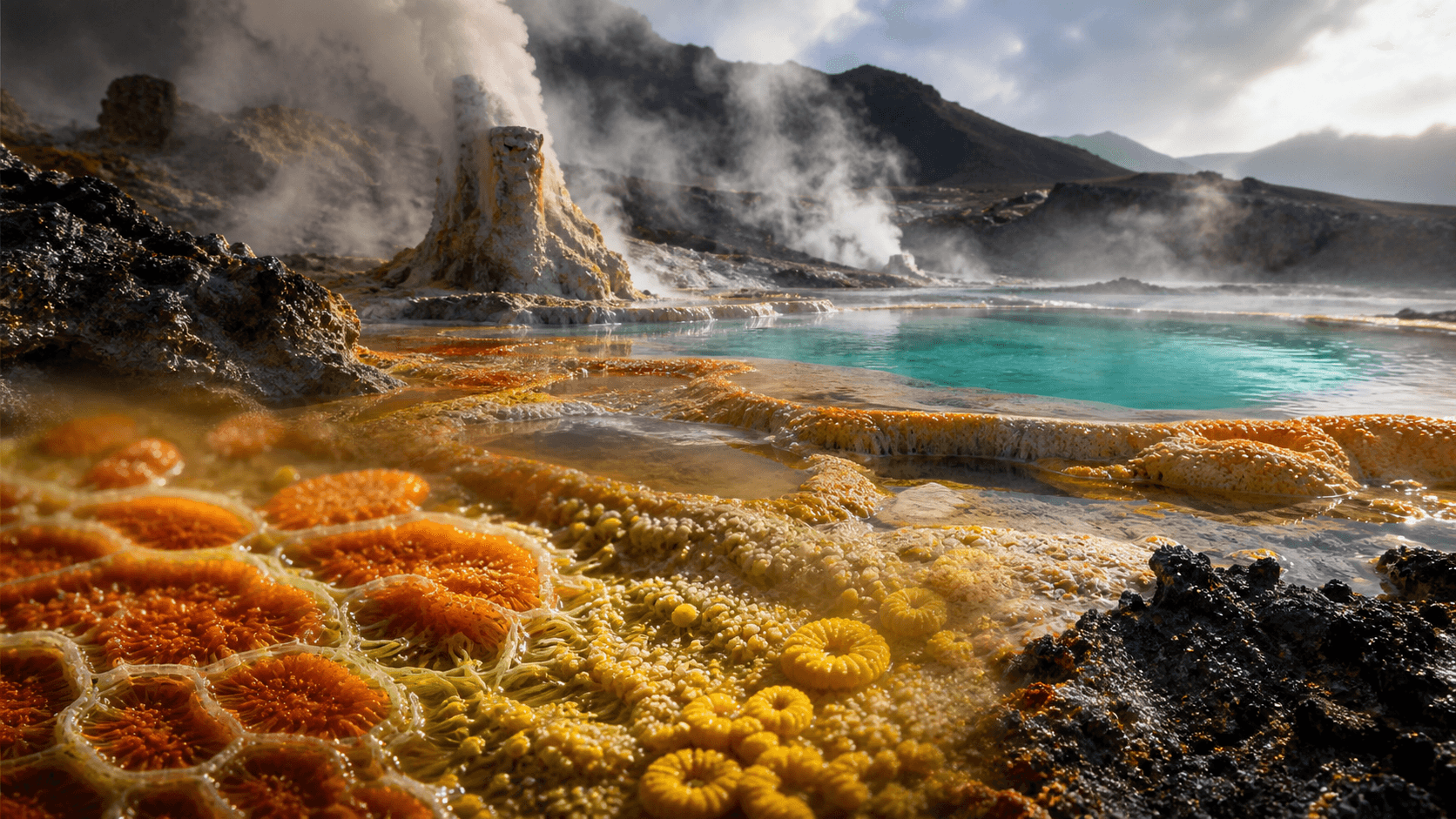
This ranking highlights the extremophilic microorganisms with the highest growth temperature limits in nature. Ranked by their maximum growth temperature (Tmax) observed in laboratory conditions, these organisms reveal profound insights into biological adaptation under extreme heat and provide critical clues for astrobiology research.
These microbes are not just 'heat-resistant'; they are obligate thermophiles, meaning they cannot survive at ambient temperatures.
| Rank | Name | Max Growth Temperature (°C) | Habitat |
|---|---|---|---|
| 1 | Methanopyrus kandleri (Strain 116) | 122 | Deep-sea hydrothermal vent |
| 2 | Geogemma barossii (Strain 121) | 121 | Pacific deep-sea vent |
| 3 | Pyrolobus fumarii | 113 | Atlantic hydrothermal vent |
| 4 | Pyrococcus furiosus | 103 | Geothermal sediments |
| 5 | Pyrococcus yayanosii | 102 | Deep-sea sediments |
| 6 | Thermococcus kodakarensis | 100 | Volcanic sulfur springs |
| 7 | Methanocaldococcus jannaschii | 98 | Deep-sea hydrothermal chimney |
| 8 | Sulfolobus solfataricus | 92 | Acidic hot springs |
| 9 | Thermotoga maritima | 90 | High-temperature seafloor |
| 10 | Aquifex aeolicus | 85 | Terrestrial hot springs |
Comments