1
East Pacific Rise (EPR)
- Number of Confirmed Sites
- 185
- Geological Feature
- Fast-spreading ridge, highly active
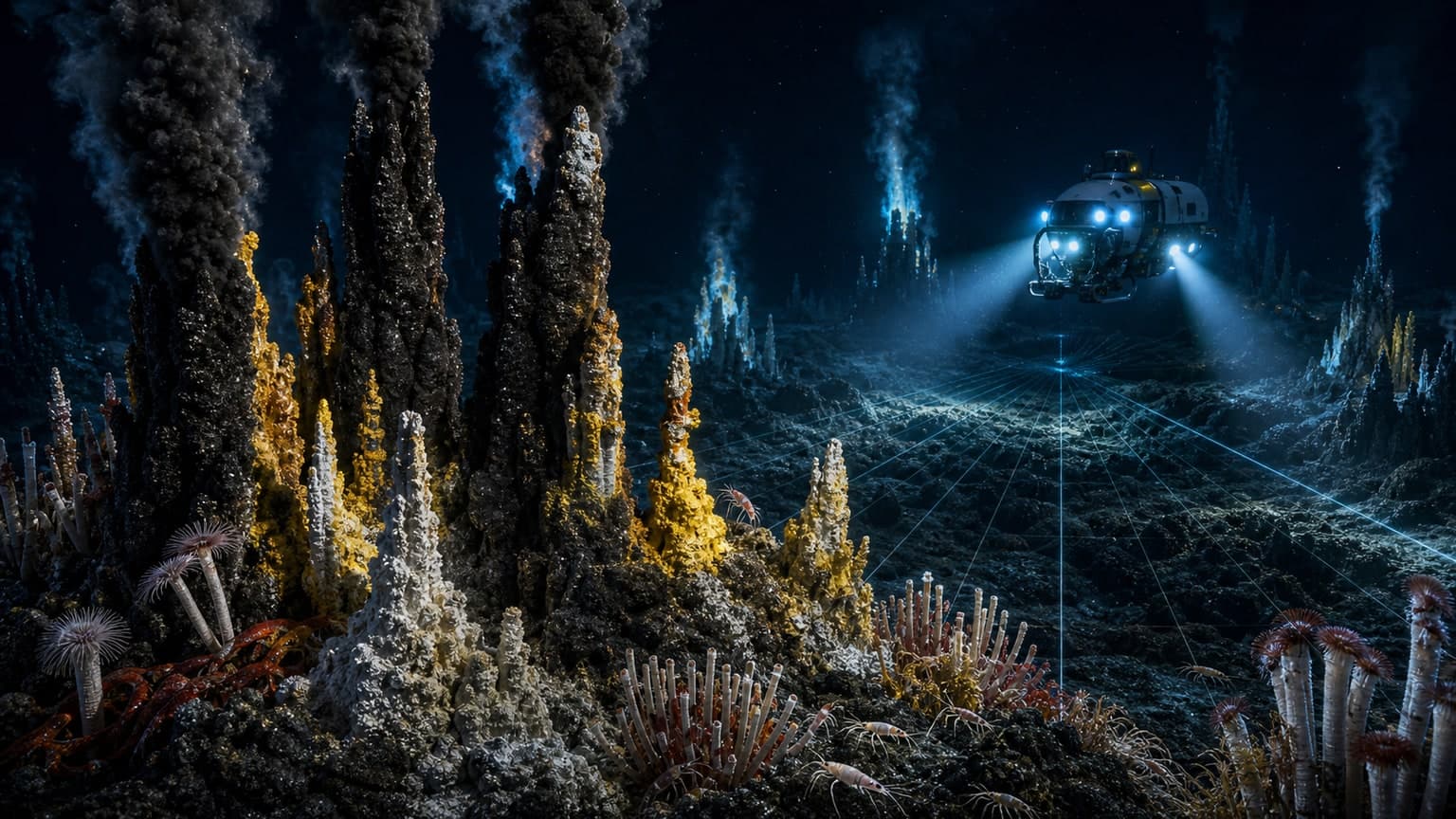
This ranking, based on marine geoscience data as of 2026, evaluates the density of deep-sea hydrothermal vent discoveries across mid-ocean ridges and back-arc basins. Rankings are determined by the number of confirmed hydrothermal activity sites, reflecting both geological tectonic activity and the intensity of deep-sea exploration efforts.
Hydrothermal vents, often called 'black smokers,' are not only windows for Earth's energy release but also cradles of deep-sea chemosynthetic ecosystems.
| Rank | Region Name | Number of Confirmed Sites | Geological Feature |
|---|---|---|---|
| 1 | East Pacific Rise (EPR) | 185 | Fast-spreading ridge, highly active |
| 2 | Mariana Trough | 92 | Back-arc basin, dense hydrothermal vent zone |
| 3 | Mid-Atlantic Ridge (MAR) | 88 | Slow-spreading ridge, deep circulation |
| 4 | North Fiji Basin | 76 | Complex tectonic junctions, thin crust |
| 5 | South Pacific Rise (SPR) | 65 | Ultra-fast spreading axis, high output |
| 6 | Red Sea Rift | 52 | High-salinity hydrothermal fluids |
| 7 | Okinawa Trough | 47 | Continental back-arc basin, clustered vents |
| 8 | Cayman Trough | 39 | Site of ultra-deep vent discoveries |
| 9 | Central Indian Ridge (CIR) | 35 | Divergent plate boundary activity |
| 10 | Juan de Fuca Ridge (JdFR) | 28 | Most thoroughly studied near-shore zone |
Comments