1
Desert Locust
- Estimated Max Aggregation Size
- 100B+
- Brief Description
- Forms massive swarms covering hundreds of km²
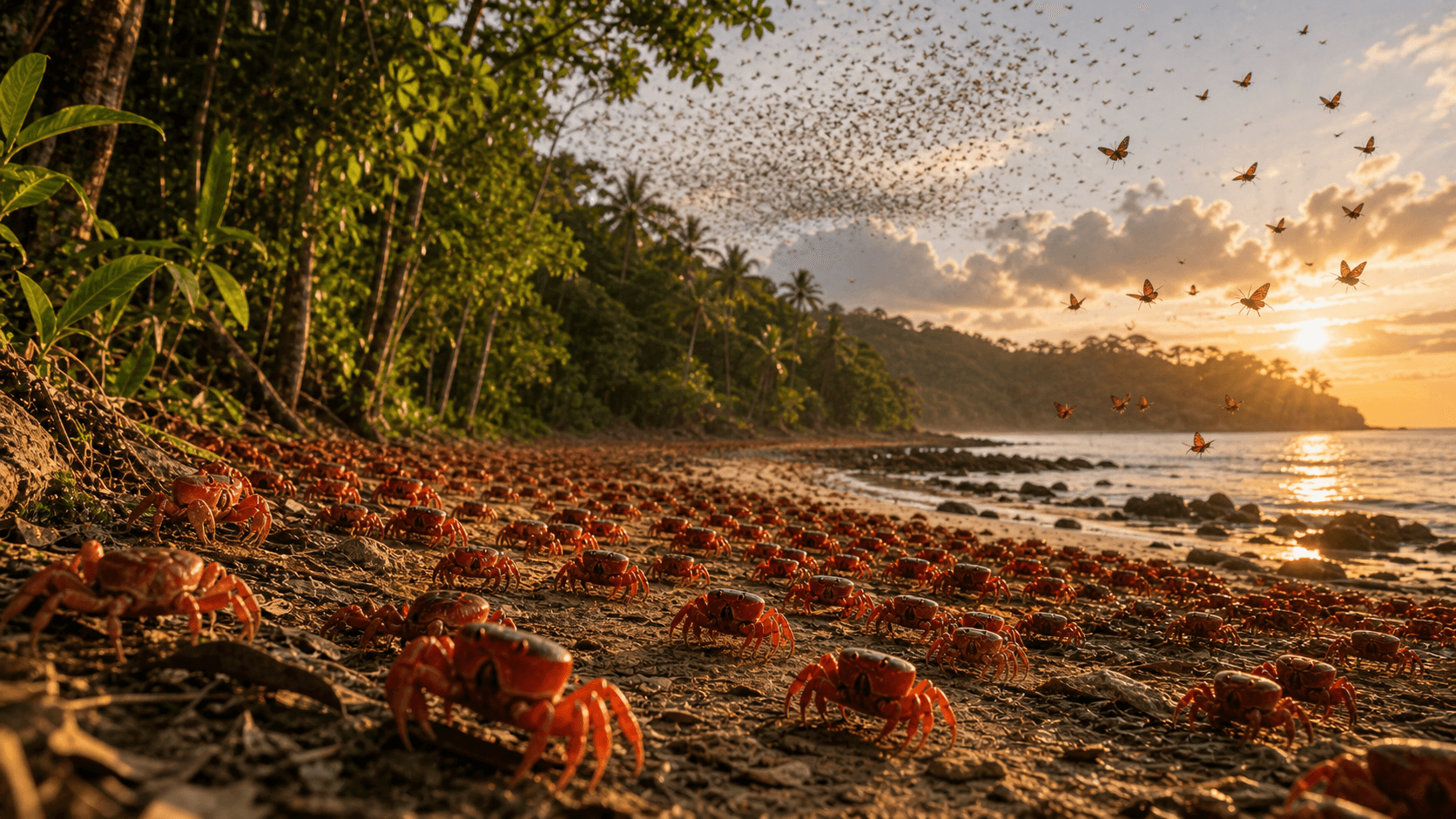
This ranking lists arthropod species based on the scale and density of their aggregations during specific breeding or migration cycles. From locust swarms darkening the sky to red crab migrations, these phenomena are both biological wonders and extreme examples of energy flow in nature.
The scale of these aggregations is truly staggering:
| Rank | Species Name | Estimated Max Aggregation Size | Brief Description |
|---|---|---|---|
| 1 | Desert Locust | 100B+ | Forms massive swarms covering hundreds of km² |
| 2 | Antarctic Krill | 10B+ | High-density schools forming massive pelagic swarms |
| 3 | Mayfly | Hundreds of millions | Mass emergence for synchronized mating and egg-laying |
| 4 | Mormon Cricket | Tens of millions | Massive flightless marching swarms destroying vegetation |
| 5 | Christmas Island Red Crab | 50M | Annual massive migration from rainforest to the sea |
| 6 | Periodical Cicada | Tens of millions | Mass emergence after long intervals in high density |
| 7 | Army Ant | 20M | Single colony size sweeping through the forest floor |
| 8 | Japanese Spider Crab | Tens of thousands | Large aggregations in shallow waters during breeding |
| 9 | European Honey Bee | 50k-80k | Swarms during colony splitting to establish new hives |
| 10 | Monarch Butterfly (Replacement: Citrus Swallowtail) | Tens of thousands | Massive overwintering clusters |
Comments