1
Caesarea Underwater Hoard
- Quantity
- 2000
- Period/Context
- Israel, Fatimid Caliphate
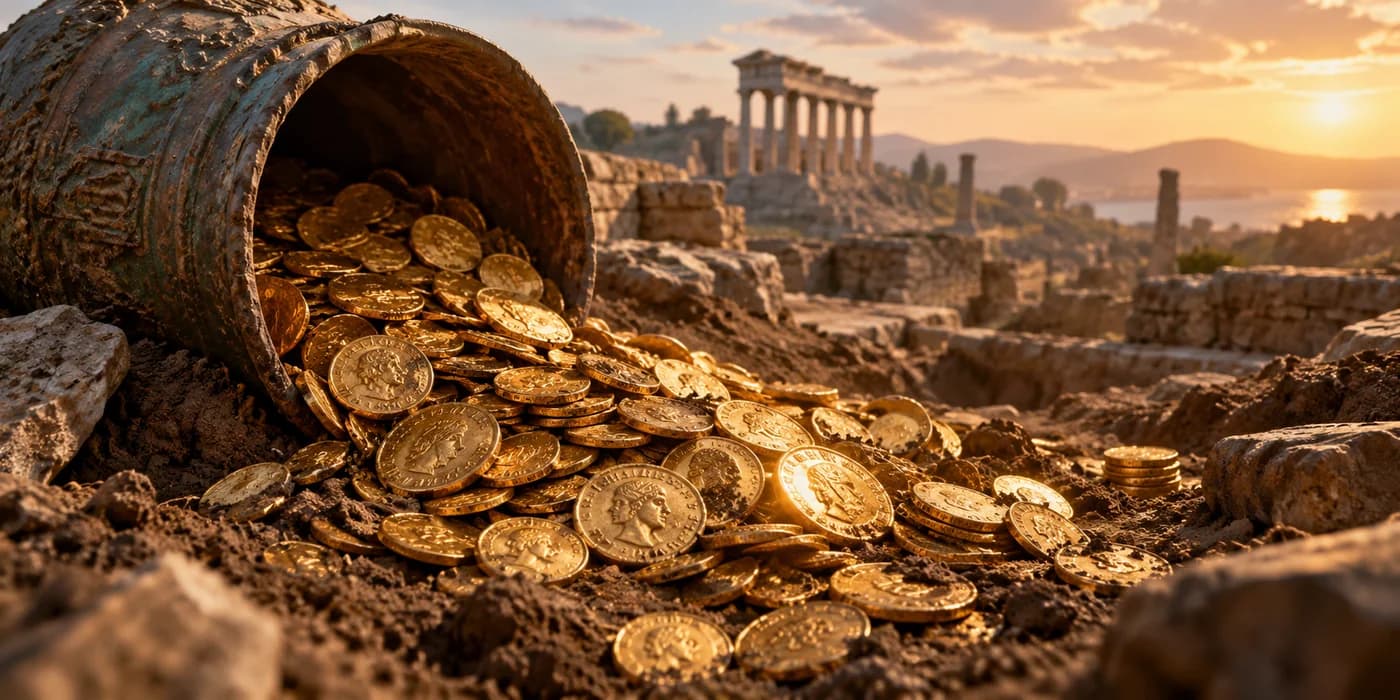
This list ranks archaeological sites by the quantity of gold coins recovered in a single excavation event. These discoveries represent not only significant monetary wealth but also provide invaluable historical evidence for ancient economic systems, trade routes, and political transformations.
Ranking methodology has not been provided.
References: 0. Page edits do not imply that the underlying data is newer. AI assisted in producing this content; verification status is shown above.
The Caesarea underwater hoard holds the top spot in archaeological history with a staggering 2,000 gold coins. It represents far more than just currency; it is a "sunken treasure trove":
| Rank | Site Name | Quantity | Period/Context |
|---|---|---|---|
| 1 |
No sign-in required. Feedback is reviewed before any content is changed. Limit: 5 per day.
Caesarea Underwater Hoard |
2000 |
| Israel, Fatimid Caliphate |
| 2 | Sussex Gold Hoard | 1500 | UK, Anglo-Saxon period |
| 3 | Yavne Hoard | 425 | Israel, Abbasid period |
| 4 | Crimea Gold Hoard | 300 | Ukraine, Bosporan Kingdom |
| 5 | Haifa Hoard | 264 | Israel, Roman Empire |
| 6 | Apollonia Hoard | 200 | Albania, Ancient Greek |
| 7 | Villereversure Hoard | 180 | France, Gaulish period |
| 8 | Castle Combe Hoard | 160 | UK, Roman Britain |
| 9 | Sardis Hoard | 150 | Turkey, Kingdom of Lydia |
| 10 | Heraclea Hoard | 120 | Italy, Magna Graecia |
Comments