1
Breaking Bad
- Editorial reading and viewing notes
- Follow small decisions gradually altering relationships rather than watching only for major turns; pay attention to consequences that accumulate over time.
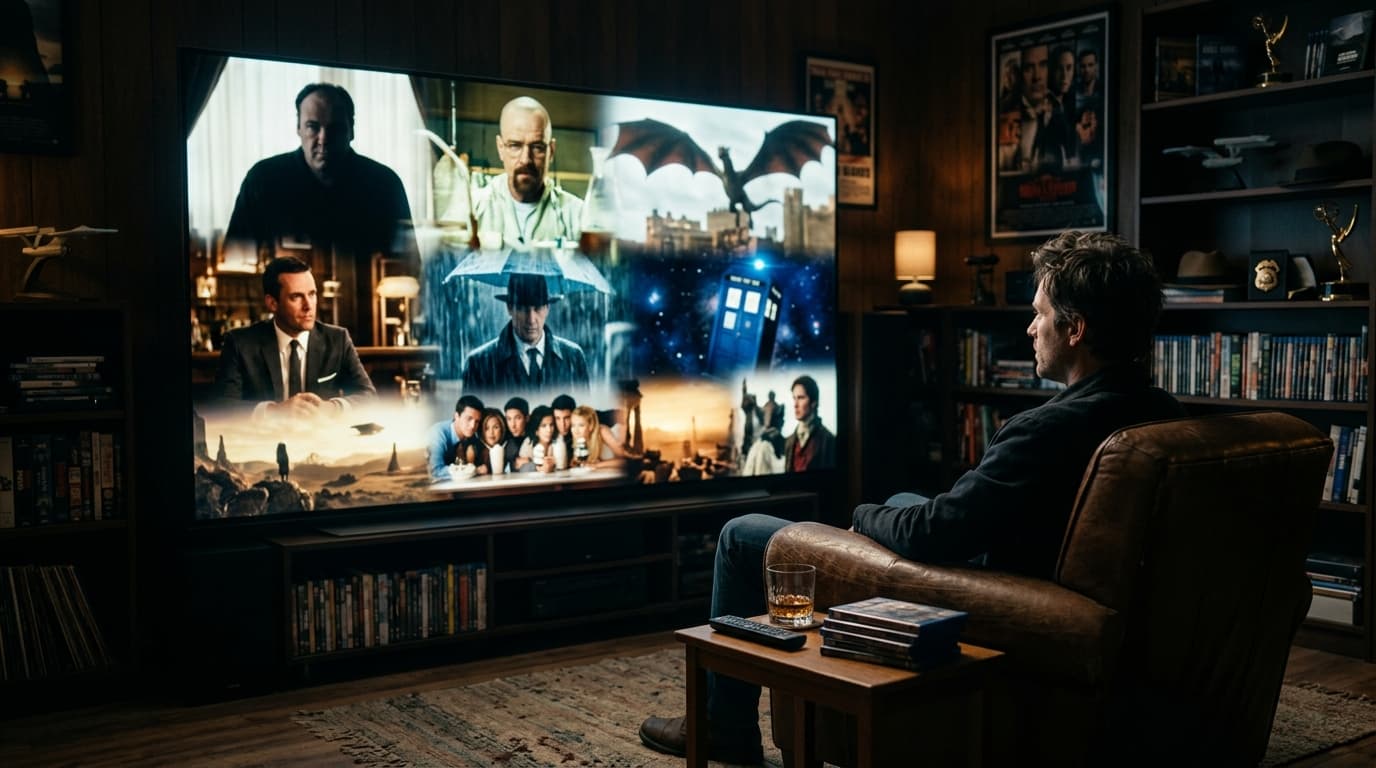
Fifteen series approached through pacing, relationships and presentation. No score combines IMDb, Rotten Tomatoes or awards. Some entries explicitly cover selected seasons; follow story order and avoid spoilers when exploring them.
An AnyRank editorial selection based on the specific observation questions and reading, listening or viewing prompts in each entry. Existing subjects and browsing order are retained; positions are not objective ranks. No sales, awards, citation totals or unmeasured influence scores determine the order. Unsupported scores, mixed units and unchecked background fields have been removed and individual bilingual notes written. Editorial judgments do not require external proof; checkable factual claims still need separate checking. AI assisted rewriting and consistency review; this does not claim independent expert or human endorsement of every entry.
Editorial selection: numbers indicate reading order, not measured scores or an authoritative ranking. AI assisted in producing this content; verification status is shown above.
For slowly accumulating character change, try Breaking Bad or Better Call Saul. For ensembles and institutions, explore The Wire or Succession. Comedy, animation and drama answer different viewing preferences; a single score is less useful than knowing what you seek.
No sign-in required. Feedback is reviewed before any content is changed. Limit: 5 per day.
| NO. | Selection | Editorial reading and viewing notes |
|---|---|---|
| 1 | Breaking Bad | Follow small decisions gradually altering relationships rather than watching only for major turns; pay attention to consequences that accumulate over time. |
| 2 | The Wire | Map connections between people and institutions without searching immediately for one protagonist; approach the city's problems from multiple positions. |
| 3 | Game of Thrones (Seasons 1-6) | This entry covers the first six seasons only; follow alliances, families and personal choices without treating that scope as a judgment of the whole series. |
| 4 | Chernobyl | Track information being communicated, suppressed and understood, alongside the pressure created by scenes; check historical details against documentary sources separately. |
| 5 | The Sopranos | Compare characters across family, work and self-explanation, noticing ordinary details while allowing their contradictions to remain uncomfortable. |
| 6 | True Detective (Season 1) | Limited to season one: watch the investigation alongside the central relationship, giving atmosphere and shifting viewpoints attention beyond guessing the answer. |
| 7 | Friends | Explore how a recurring group produces changing comic rhythms, while considering why some jokes may draw different responses from viewers today. |
| 8 | Better Call Saul | Follow language, procedure and small compromises accumulating at a patient pace; infer character change from behaviour rather than expecting constant action. |
| 9 | Rick and Morty | Explore absurd premises alongside family conflict if adult animation suits you; playful dialogue should not be taken as scientific instruction. |
| 10 | The Office (US) | Watch glances towards the camera, pauses and discomfort forming comedy beyond spoken punchlines, with workplace relationships as an entry point. |
| 11 | Succession | Compare what characters want their words to do with what they actually do, especially where family attachment and advantage become entangled. |
| 12 | Sherlock | Study how images present inference, separating clues from the persuasiveness of performance; fast narration and interpersonal exchanges provide the appeal. |
| 13 | The Last of Us | Watch relationships changing along the journey alongside moments of danger, considering the costs of care and choice rather than crisis alone. |
| 14 | Mad Men | Study gaps between public image and private life, including silences and spatial arrangements; allow detail and gradual shifts to guide the viewing. |
| 15 | Stranger Things | Explore how adventure, friendship and suspense support each other; begin with the group's relationships rather than relying only on nostalgic references. |
Comments