- Max Salt Tolerance (%)
- 3.5
- Key Characteristics
- Highly developed salt glands; tolerates full seawater salinity
Top 10Updated 2026年3月12日
Top 10 Most Salt-Tolerant Plant Species in Nature
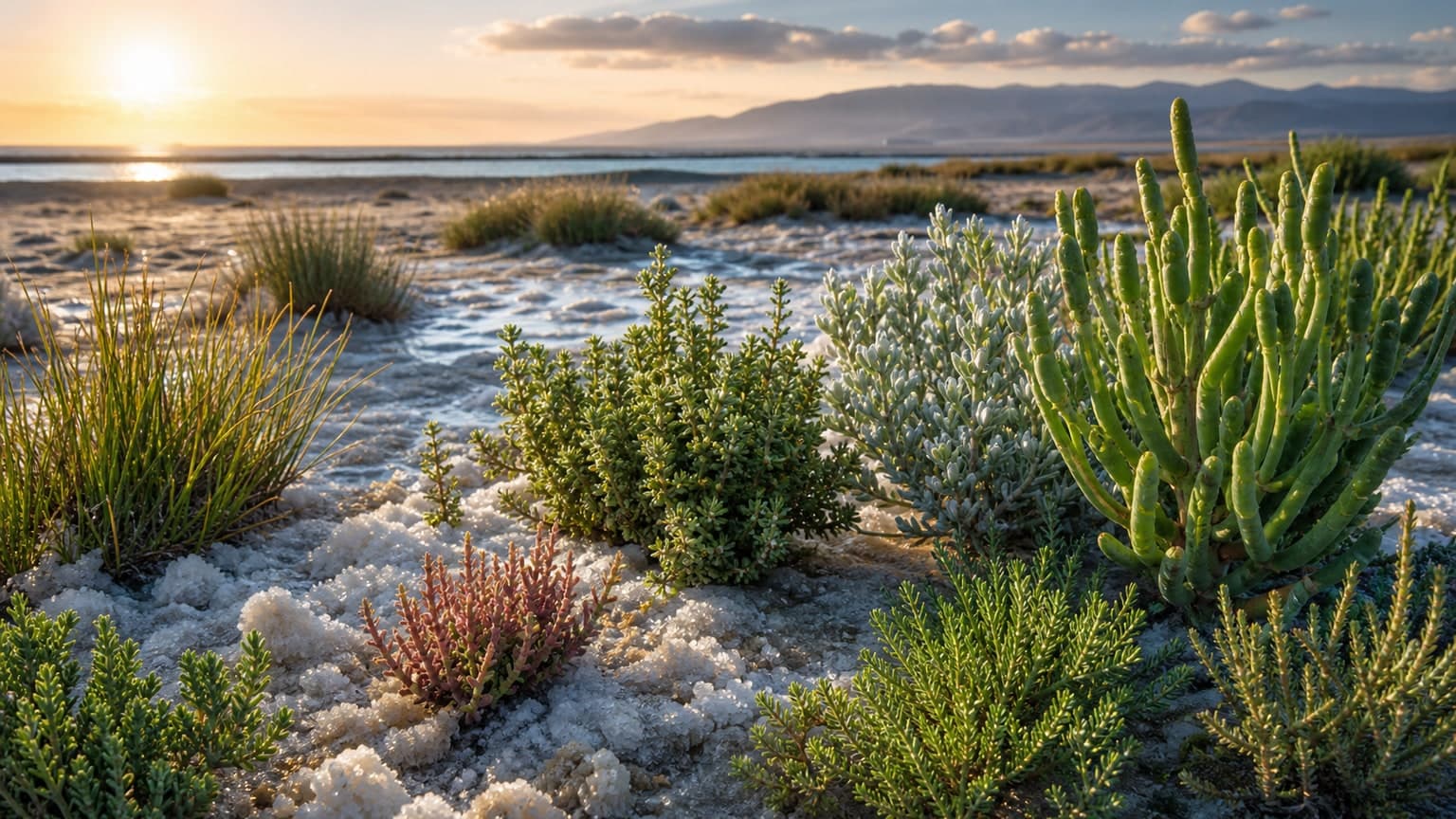
This ranking evaluates plant species based on their tolerance limits to soil salinity and alkalinity. These halophytes demonstrate exceptional osmotic adjustment and ion-exclusion capabilities in extreme environments, holding profound scientific significance for global saline-alkali land restoration and food security.
Top 3
- 1Spartina anglica
Interesting Facts & Summary
In the 'extreme arena' of halophytes, Spartina anglica (Common cordgrass) stands as the undisputed champion—and a profound ecological 'double-edged sword.'
- Salt Tolerance Limit: Spartina anglica thrives in environments with salinity levels reaching 30‰ to 35‰ (near that of seawater), a feat far surpassing most terrestrial crops.
- Data Comparison: While ordinary rice typically experiences severe yield loss at salinity levels above 3‰, Spartina anglica is 10 times more salt-tolerant, allowing it to act as a pioneer species on barren, saline intertidal mudflats.
- Ecological Paradox: Although it is an 'engineering hero' for reclaiming saline-alkali land and stabilizing coastlines, its aggressive nature has branded it one of the 'world's most harmful invasive plants.' Its highly developed root system efficiently secretes salt to survive, yet simultaneously crowds out native vegetation. It is, undeniably, one of nature’s most 'hardcore' survivalists.
| Rank | Name | Max Salt Tolerance (%) | Key Characteristics |
|---|---|---|---|
| 1 | 3.5 | Highly developed salt glands; tolerates full seawater salinity | |
| 2 | 3 |
List Stats
Views421
Items10
CategoryNature & Biology
Comments