1
Blue Whale
- Lower Sensitivity Limit (Hz)
- 10
- Primary Sensing Mechanism
- Long-range infrasound detection
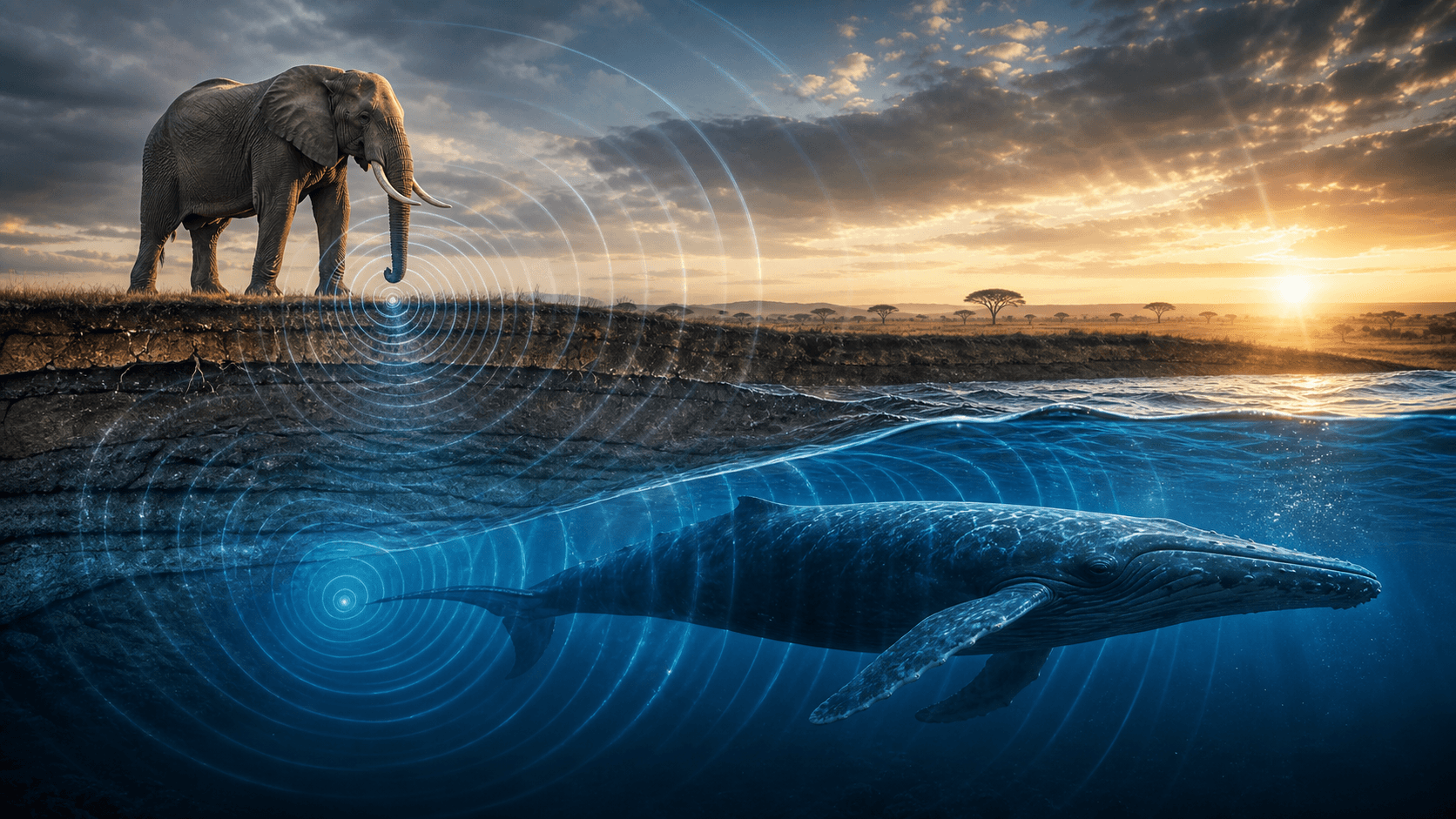
This ranking evaluates mammals based on their sensitivity thresholds to infrasound (below 20Hz) and low-frequency audio. These species typically use low-frequency sounds for long-distance communication, seismic sensing, or predator detection, reflecting deep evolutionary adaptation to their survival environments.
In the vast natural world, infrasound acts like a 'radio wave' that can travel hundreds of kilometers through air, water, and even the earth's crust. Unlike high-frequency sounds, they are not easily blocked by forests or obstacles. Many top predators and migratory animals use specialized cochlear structures or vibration-sensing pads on their feet to capture these natural whispers.
| Rank | Name | Lower Sensitivity Limit (Hz) | Primary Sensing Mechanism |
|---|---|---|---|
| 1 | Blue Whale | 10 | Long-range infrasound detection |
| 2 | African Elephant | 14 | Seismic foot sensation |
| 3 | Giraffe | 16 | Specialized infrasound communication |
| 4 | Hippopotamus | 18 | Underwater low-frequency filtering |
| 5 | Okapi | 20 | Pinna shape low-frequency amplification |
| 6 | Orca | 20 | Wide-band complex processing |
| 7 | Moose | 22 | Long-range forest monitoring |
| 8 | White Rhinoceros | 25 | Ground vibration perception |
| 9 | Humpback Whale | 25 | Deep sea long-wavelength communication |
| 10 | Leopard | 28 | Low-frequency prey footstep detection |
Comments