1
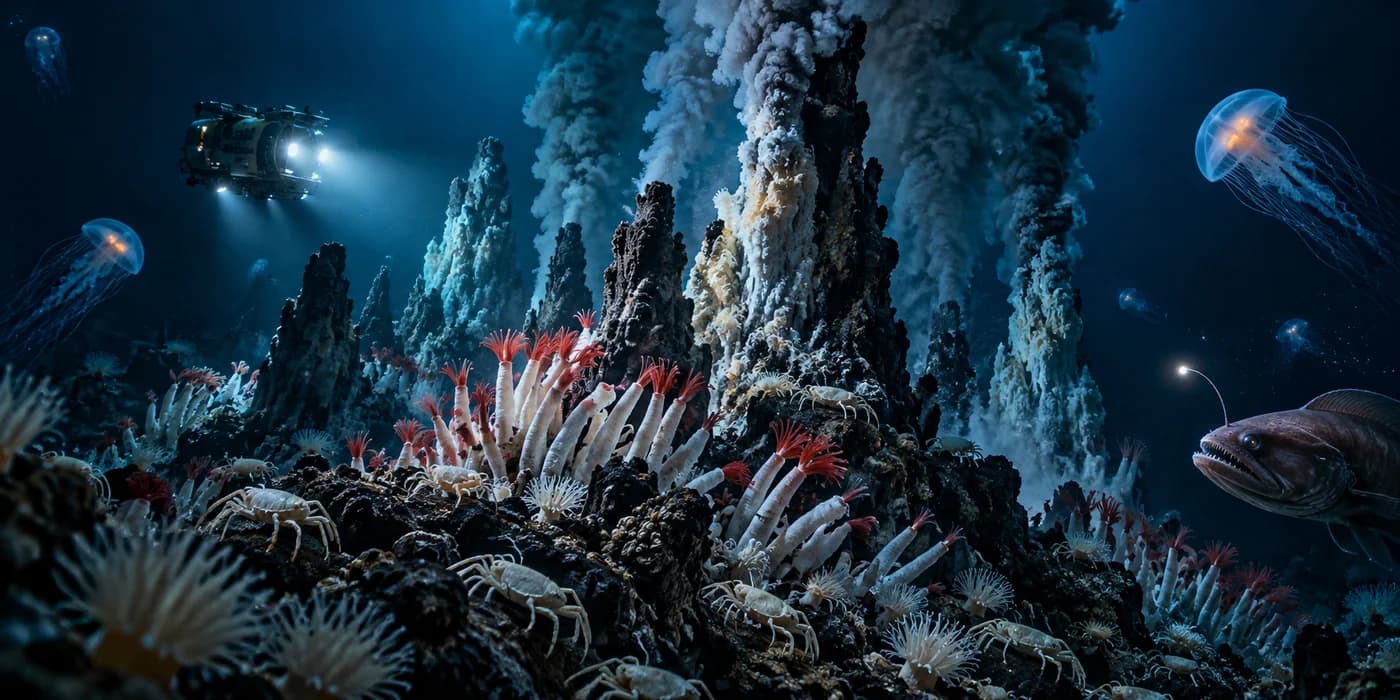
Galápagos Rift Vents
- Depth (m)
- 2500
- Environmental Feature
- First discovery of a chemosynthetic ecosystem
This ranking highlights the ten most astonishing biological communities discovered during human exploration of the deep sea. The criteria include the uniqueness of the ecosystem, the extreme pressure levels of the habitat, the scientific significance of the biodiversity, and their contributions to our understanding of the origins of life on Earth.
The deep sea is not a barren wasteland; it harbors the most primitive and resilient life forms on Earth. The discovery of these communities has revolutionized our understanding of biology, proving that life does not necessarily rely on sunlight.
| Rank | Name | Depth (m) | Environmental Feature |
|---|---|---|---|
| 1 | Galápagos Rift Vents | 2500 | First discovery of a chemosynthetic ecosystem |
| 2 | Challenger Deep, Mariana Trench | 10911 | Deepest point on Earth, unique hadal fauna |
| 3 | Gulf of Mexico Cold Seeps | 2000 | Unique community built on methane seepage |
| 4 | East Pacific Rise Black Smokers | 2600 | Sulfide-rich, high-temperature vents |
| 5 | Okinawa Trough Hydrothermal Field | 1500 | High-density shrimp population zones |
| 6 | East Scotia Ridge Vents | 2400 | First hydrothermal vents discovered in Antarctic waters |
| 7 | Gakkel Ridge Vents | 4000 | Complex interaction between extreme cold and vents |
| 8 | Costa Rica Trench Seeps | 5000 | Symbiotic system of brittle stars and tube worms |
| 9 | Lost City Hydrothermal Field | 800 | Alkaline fluid-driven carbonate chimneys |
| 10 | Deep-sea Whale Fall Ecosystem | 1000 | Micro-communities formed by scavenged carcasses |
Comments