1
Shandong cuisine
- Tasting prompts
- Notice broth and scallion aromas first, then compare braising with quick frying; texture can reveal more than saltiness alone.
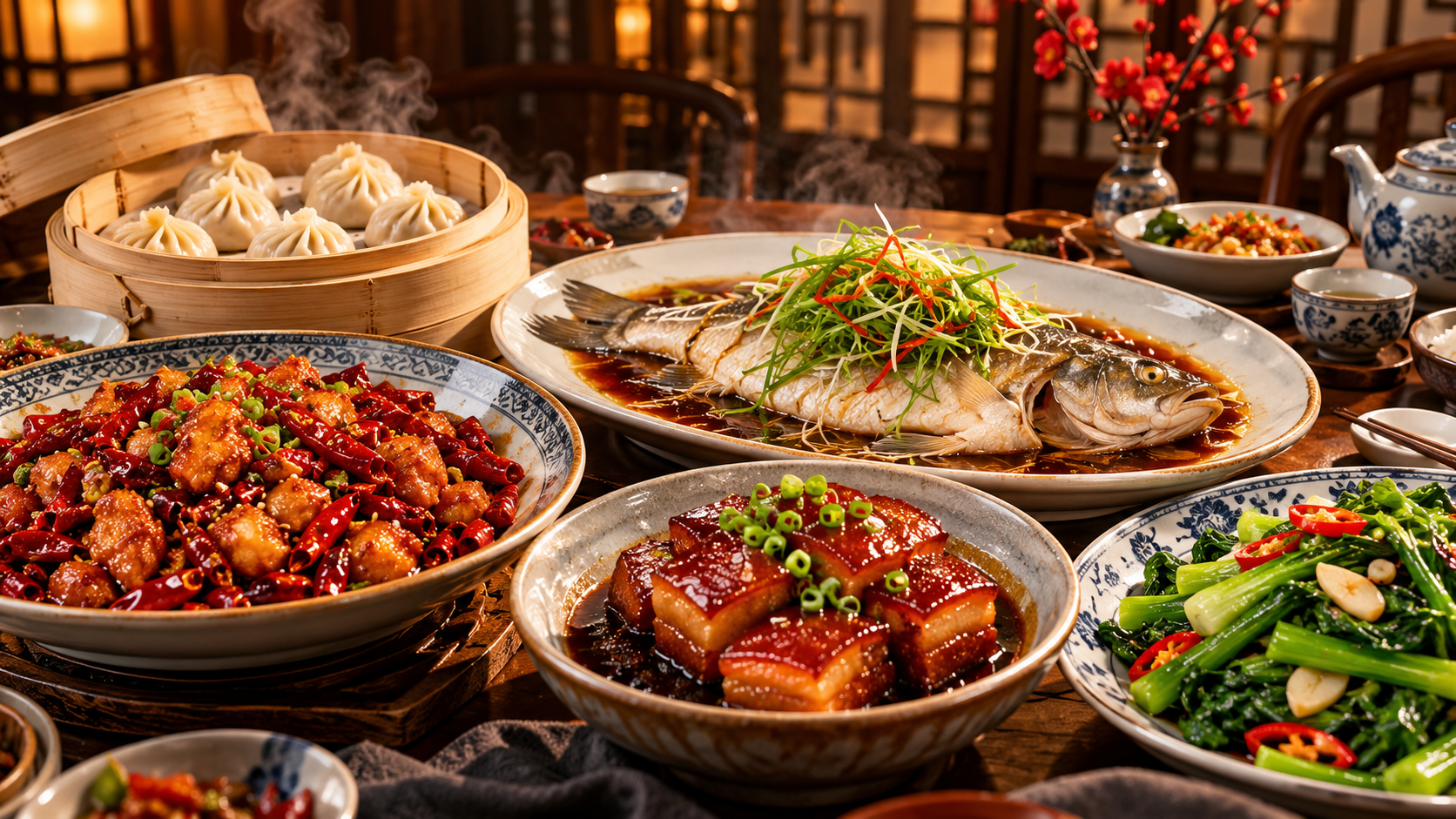
Use the commonly recognized “Eight Great Cuisines” grouping as a starting point for eight tasting prompts. These selections are a guide, not a ranking and not an exhaustive list of China’s regional cuisines. Prompts are editorial suggestions; each cuisine varies by region, restaurant and cook, and tastes differ.
An AnyRank editorial tasting guide using the common “Eight Great Cuisines” grouping as an entry point. Shandong, Sichuan, Cantonese, Jiangsu, Fujian, Zhejiang, Hunan and Anhui are ordered for browsing only; positions do not imply quality, influence or a composite score. State Council Information Office and National Immigration Administration material support the grouping and broad flavour context. Hunan technique context comes from an article republished on the provincial government portal and credited to China Tourism Network. The National Immigration Administration also lists other regional cuisines, so this page does not claim to exhaust Chinese food. Each row is an optional editorial observation prompt, not a rule for every dish, region, restaurant or cook and not a quotation from a source. Tastes differ; the guide does not decide which cuisine tastes best. AI assisted rewriting and consistency review; this does not claim independent expert or human endorsement of every entry.
Editorial selection: numbers indicate reading order, not measured scores or an authoritative ranking.
For a first tasting, try a steamed Cantonese dish or a Fujian soup, then compare the seasoning prompts for Sichuan and Hunan. Jiangsu and Zhejiang notes focus on preparation; Shandong and Anhui notes invite attention to braising and stewing. These are tasting cues, not a full account of every cuisine or dish.
No sign-in required. Feedback is reviewed before any content is changed. Limit: 5 per day.
Lists the commonly recognized eight cuisines and summarizes broad regional flavours and cooking styles. Used for classification and background only, not to rank cuisines.
Lists the eight cuisines and also names regional styles such as Dongbei, Beijing and Shanghai cuisine, supporting the note that the selection is not exhaustive.
| NO. | Cuisine | Tasting prompts |
|---|---|---|
| 1 | Shandong cuisine | Notice broth and scallion aromas first, then compare braising with quick frying; texture can reveal more than saltiness alone. |
| 2 | Sichuan cuisine | Separate numbing spice, chilli heat, acidity and sweetness rather than choosing only by heat; a mild dish helps reset the palate. |
| 3 | Cantonese cuisine | Compare steamed or briefly poached ingredients with roasted dishes; the contrast teaches more about preparation than ingredient price does. |
| 4 | Jiangsu cuisine | Look for even preparation, tender textures and how sauce coats ingredients; this is a useful route into food through texture rather than intensity. |
| 5 | Fujian cuisine | Start with soup and consider how savouriness, aroma and gentle acidity or sweetness interact; more ingredients need not mean better flavour. |
| 6 | Zhejiang cuisine | Compare lighter dishes with richer sauces, paying attention to seafood and vegetable textures rather than reducing the whole cuisine to sweetness. |
| 7 | Hunan cuisine | Compare fresh chilli, chopped chilli and cured flavours; milder preparations still let you explore seasoning and aroma. |
| 8 | Anhui cuisine | Use a slow-cooked dish to explore aromas within ingredients and contrasts between soft and firm textures; richness need not mean excessive salt or oil. |
The Hunan government portal page credits China Tourism Network. It describes sour and spicy, aromatic, tender qualities and braising, stewing, curing, steaming and frying; used only as background for a tasting prompt.
Comments