HomeHistory & CivilizationTop 10 Ancient Civilizations with the Most Complete Epistolary ArchivesTang dynasty
百科词条From Wikipedia
Tang dynasty
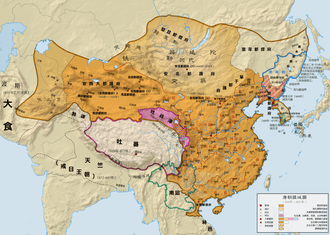
The Tang dynasty (; Chinese: 唐朝 [tʰɑ̌ŋ ʈʂʰɑ̌ʊ]), or the Tang Empire, was an imperial dynasty of China that ruled from 618 to 907, with an interregnum between 690 and 705. It was preceded by the Sui dynasty and followed by the Five Dynasties and Ten Kingdoms period. Historians generally regard the Tang as a high point in Chinese civilisation, and a golden age of cosmopolitan culture. Tang territory, acquired through the military campaigns of its early rulers, rivalled that of the Han dynasty. The Li family founded the dynasty after taking advantage of a period of Sui decline and precipitating their final collapse, in turn inaugurating a period of progress and stability in the first half of the dynasty's rule. The dynasty was formally interrupted during 690–705 when Empress Wu Zetian seized the throne, proclaiming the Wu Zhou dynasty and becoming the only legitimate Chinese empress regnant. The An Lushan rebellion (755–763) led to devastation and the decline of central authority during the latter half of the dynasty. Like the previous Sui dynasty, the Tang maintained a civil-service system by recruiting scholar-officials through standardised examinations and recommendations to office. The rise of regional military governors known as jiedushi during the 9th century undermined this civil order. The dynasty and central government went into decline by the latter half of the 9th century; agrarian rebellions resulted in mass population loss and displacement, widespread poverty, and further government dysfunction that ultimately ended the dynasty in 907.
Categories
10th-century disestablishments in China10th century in China618 establishments7th-century establishments in China7th century in China8th century in China907 disestablishments9th century in China
Quick Facts
京城
 
国君姓氏
隴西李氏
• 690年—705年
洛阳
• 618年—690年、705年—904年
长安