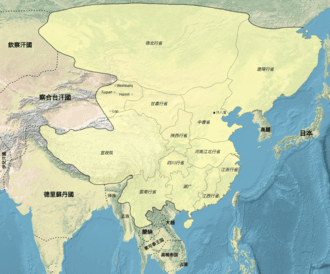
Yuan dynasty
百科词条From Wikipedia

Yuan dynasty

The Yuan dynasty, officially the Great Yuan, was a Mongol-led imperial dynasty of China and a successor state to the Mongol Empire after its division. It was established by Kublai (Emperor Shizu or Setsen Khan), the fifth khagan-emperor of the Mongol Empire from the Borjigin clan, and lasted from 1271 to 1368 AD. In Chinese history, the Yuan dynasty followed the Song dynasty and preceded the Ming dynasty. Although Genghis Khan's enthronement as Khagan in 1206 was described in Chinese as the Han-style title of Emperor and the Mongol Empire had ruled territories including modern-day northern China for decades, it was not until 1271 that Kublai Khan officially proclaimed the dynasty in the traditional Han style, and the conquest was not complete until 1279 when the Southern Song dynasty was defeated in the Battle of Yamen. His realm was, by this point, isolated from the other Mongol-led khanates and controlled most of modern-day China and its surrounding areas, including modern-day Mongolia. It was the first dynasty founded by a non-Han ethnicity that ruled all of China proper. In 1368, following the defeat of the Yuan forces by the Ming dynasty, the Genghisid rulers retreated to the Mongolian Plateau and continued to rule until 1635 when they surrendered to the Later Jin dynasty (which later evolved into the Qing dynasty); this rump state is known in Chinese history as the Northern Yuan. After the division of the Mongol Empire, the Yuan dynasty was the khanate ruled by the successors of Möngke. In official Chinese histories, the Yuan dynasty bore the Mandate of Heaven. The dynasty was established by Kublai Khan, yet he placed his grandfather Genghis Khan on the imperial records as the official founder of the dynasty and accorded him the temple name Taizu. In the edict titled Proclamation of the Dynastic Name issued in 1271, Kublai announced the name of the new dynasty as Great Yuan and claimed the succession of former Chinese dynasties from the Three Sovereigns and Five Emperors to the Tang dynasty.

Categories

1271 establishments in Asia1368 disestablishments in Asia1368 establishments in Asia13th-century establishments in China13th-century establishments in the Mongol Empire13th century in China14th-century disestablishments in China14th-century disestablishments in the Mongol Empire

Quick Facts

Status
Khagan-ruled division of the Mongol Empire[note 2]Conquest dynasty of Imperial China
Capital
Khanbaliq (now Beijing)Shangdu (summer capital)
Religion
Buddhism, Confucianism, Taoism, Shamanism, Tengrism, Chinese folk religion, Nestorian Christianity, Catholic Christianity, Judaism, Manichaeism, Islam
Government
Monarchy
Official script
ʼPhags-pa script[5]
Common languages
Middle MongolChinese (Old Mandarin)Old Uyghur
Emperor[note 3]