百科词条From Wikipedia
Asian elephant
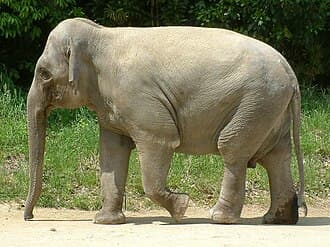
The Asian elephant (Elephas maximus), also known as the Asiatic elephant, is the only living Elephas species. It is the largest living land animal in Asia and the second largest living elephantid in the world. It is characterised by its long trunk with a single finger-like process; large tusks in males; laterally folded large ears and wrinkled grey skin that is partly depigmented on the trunk, ears or neck. Adult males average 4 t (4.4 short tons) in weight and females 2.7 t (3.0 short tons). It has a large and well developed neocortex of the brain, is highly intelligent and self-aware, being able to display behaviours associated with grief, learning and greeting. Three subspecies are recognised—E. m. maximus, E. m. indicus and E. m. sumatranus. The Asian elephant is distributed in the Indian subcontinent and Southeast Asia, from India in the west to Borneo in the east, and Nepal in the north to Sumatra in the south.
Categories
All Wikipedia articles written in British EnglishAll articles containing potentially dated statementsAnimal taxa named by Carl LinnaeusArticles containing potentially dated statements from 2013Articles containing potentially dated statements from 2019Articles containing potentially dated statements from 2020Articles with 'species' microformatsArticles with short description