HomeCelebrities & PeopleMilestones in Measuring the Speed of Light: Top 10 Scientific ContributionsJames Clerk Maxwell
百科词条From Wikipedia
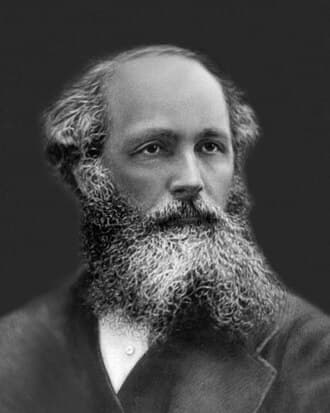
James Clerk Maxwell
James Clerk Maxwell (13 June 1831 – 5 November 1879) was a Scottish physicist and mathematician who was responsible for the classical theory of electromagnetic radiation, which was the first theory to describe electricity, magnetism and light as different manifestations of the same phenomenon. Maxwell's equations for electromagnetism achieved the second great unification in physics, where the first one had been realised by Isaac Newton. Maxwell was also key in the creation of statistical mechanics. Maxwell graduated from Trinity College, Cambridge, in 1854, where he earned distinction in mathematics and the Smith’s Prize. He remained at Cambridge briefly, publishing early mathematical work and investigations into optics, particularly the principles of colour combination and colour-blindness. He later held the Chair of Natural Philosophy at Marischal College in Aberdeen, where he studied the rings of Saturn and correctly proposed that they were composed of numerous small particles, work that earned him the Adams Prize in 1859. During this time he married Katherine Mary Dewar, who assisted him in his laboratory work. From 1860 to 1865, he served as the Professor of Natural Philosophy at King’s College London, where he developed his theory of electromagnetic fields. His publication of "A Dynamical Theory of the Electromagnetic Field" in 1865 demonstrated that electric and magnetic fields travel through space as waves moving at the speed of light, proposing that light is an undulation in the same medium that is the cause of electric and magnetic phenomena. His unification of light and electrical phenomena led to his prediction of the existence of radio waves.
Categories
1831 births1879 deaths19th-century British physicists19th-century Scottish mathematicians19th-century Scottish scientistsAcademics of King's College LondonAcademics of the University of AberdeenAll Wikipedia articles written in British English
Quick Facts
Born
(1831-06-13)13 June 1831Edinburgh, Scotland
Died
5 November 1879(1879-11-05) (aged 48)Cambridge, England
Awards
Smith's Prize (1854)Adams Prize (1857)Rumford Medal (1860)FRS (1861)Bakerian Medal (1866)Keith Medal (1869–1871) The William Hopkins Prize (1870)