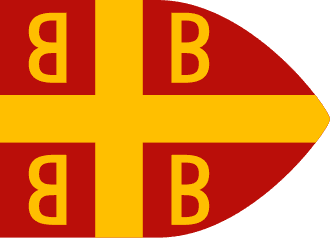
百科词条From Wikipedia
Byzantine Empire
The Byzantine Empire, also known as the Eastern Roman Empire, was the continuation of the Roman Empire centred on Constantinople during late antiquity and the Middle Ages. Having survived the events that caused the fall of the Western Roman Empire in the 5th century AD, it endured until the fall of Constantinople to the Ottoman Empire in 1453. The term 'Byzantine Empire' was coined only after its demise; its citizens used the term 'Roman Empire' and called themselves 'Romans'. During the early centuries of the Roman Empire, the western provinces were Latinised, but the eastern parts kept their Hellenistic culture. Constantine I (r. 324–337) legalised Christianity and moved the capital to Constantinople. Theodosius I (r. 379–395) made Christianity the state religion and Greek gradually replaced Latin for official use. The empire adopted a defensive strategy and, throughout its remaining history, experienced recurring cycles of decline and recovery. The Byzantine Empire reached its greatest extent under the reign of Justinian I (r. 527–565), who briefly reconquered much of Italy and the western Mediterranean coast. A plague began around 541, and a prolonged warfare with Persia placed fiscal and military strain on the empire, contributing to political and strategic challenges in the decades that followed. In the 630s and 640s the Arab conquests defeated Byzantine field armies in Syria and Egypt, resulting in the permanent loss of those provinces to the Rashidun Caliphate.
Categories
1453 disestablishments in Asia1453 disestablishments in Europe330s establishmentsAll Wikipedia articles written in British EnglishArticles containing Ancient Greek (to 1453)-language textArticles containing Latin-language textArticles containing Medieval Greek-language textArticles with short description
Quick Facts
Capital
Constantinople
Religion
Christianity (official)
Government
Absolute monarchy
Notable emperors
 
• 306–337
Constantine I
Official languages
Greek